

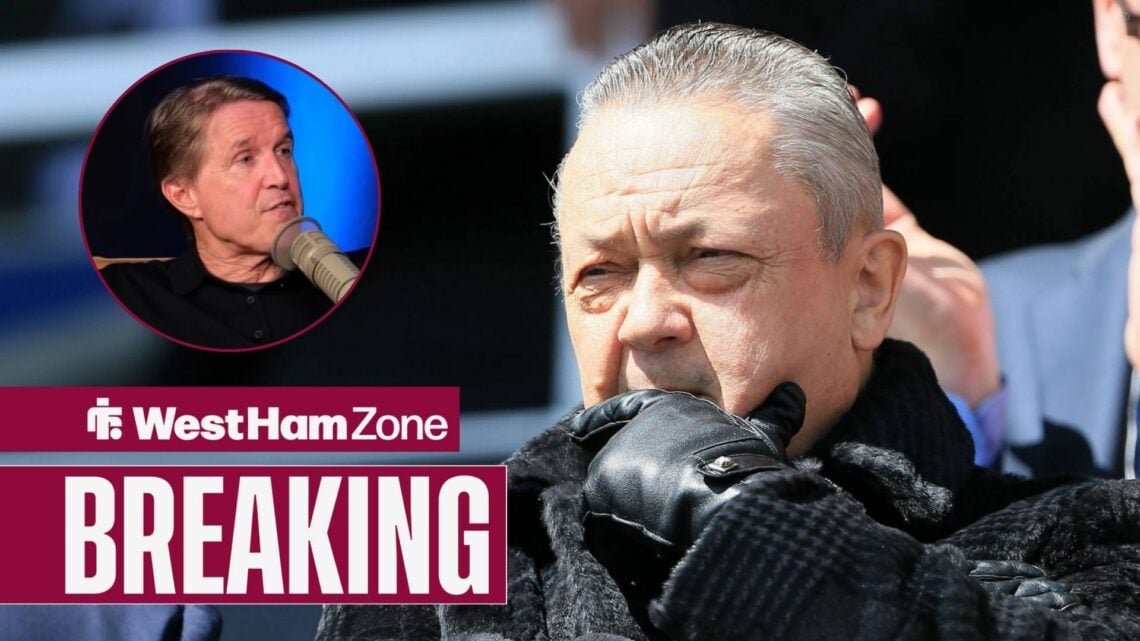
Christian Purslow shares ‘big news’ at West Ham amid recent stakeholder changes

Christian Purslow has revealed that a chunk of David Gold’s stake in West Ham United has now been sold internally to David Sullivan and Daniel Kretinsky.
Following Karren Brady’s exit from the London Stadium, there was news surrounding further changes within the ownership structure of the club.
Kretinsky appears to have stepped up his involvement and ownership of the club, though many fans haven’t heard from the man himself yet.
Plenty of uncertainty still surrounds the Irons, with supporters wary of these changes as Premier League relegation fears remain.
Gold still had a 25.1 per cent stake in West Ham through his family trust, but that has now changed, according to Purslow.
💰 WEST HAM FINANCE HUB 💰
Inside the transfer budget, record losses, summer liquidity shortfall, PSR status, and the latest boardroom news from the London Stadium.
Definitive financial analysis from the heart of West Ham United
Christian Purslow says West Ham now jointly owned 40-40
There were secret discussions about Gold’s shares, and what could soon happen with them, but things look to have been taken care of.
As seen in the table below, West Ham’s ownership structure was somewhat complex, as multiple investors owned chunks of the club.
| West Ham figure/group | Ownership stake |
| David Sullivan | 38.8% |
| 1890s holdings a.s | 27.0% |
| Vanessa Gold on behalf of the Family Trust | 25.1% |
| WHU LLC | 8.0% |
| Other investors | 1.1% |
It’s normal for these states to fluctuate and change internally, but the Hammers have always been seen as a club owned by Sullivan, though he is not in full control.
While speaking on The Football Boardroom, Purslow revealed some of the more up-to-date figures regarding West Ham’s ownership picture and what has happened with Gold’s shares.
Purslow said: “Sullivan has gone up from about 37 to 40 per cent, Kretinsky 27 to 40 per cent, that is the big news at West Ham. They’ve cleared the decks, taken out about 15 per cent of the Gold family; they still have 10 per cent, by the way, and there’s another investor with 10 per cent.
“But in essence, West Ham is now jointly owned 40-40 by this Czech [Kretinsky] and Sullivan.”
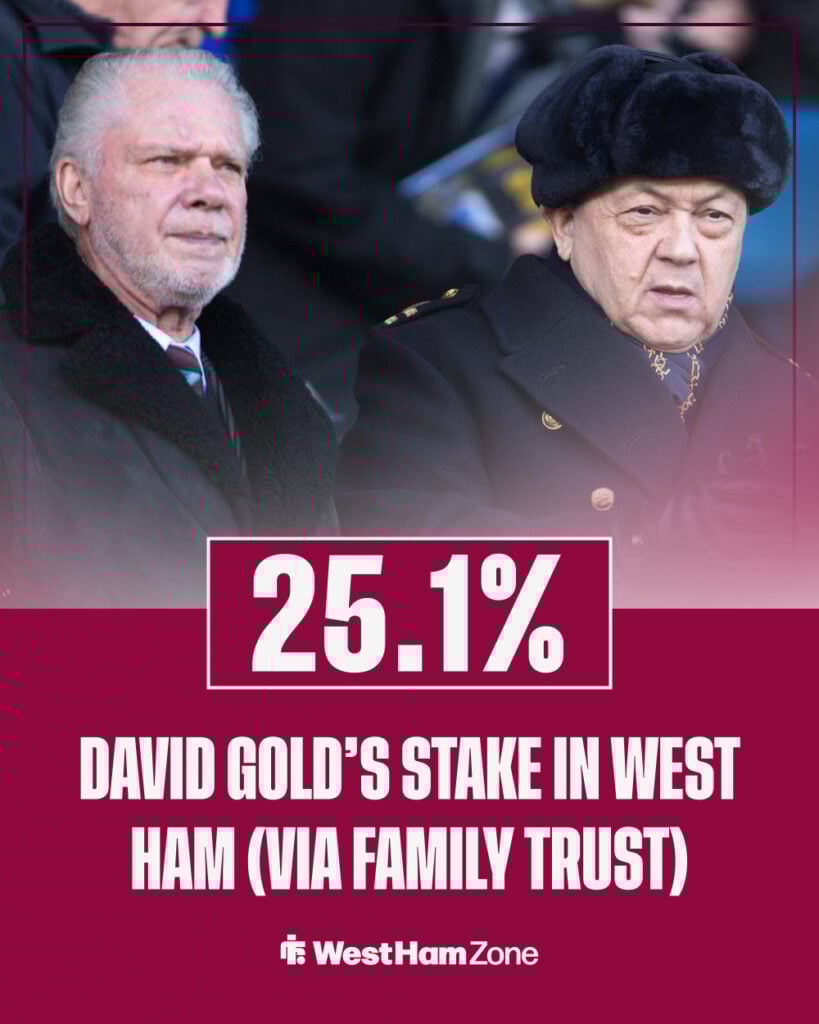
As seen in the graphic above, Gold’s family trust still had over a quarter of the stake in West Ham, but with the 10 per cent sale, it would not be a surprise to see this lower even more in the future.
Why would Gold’s family sell a portion of the stake?
Family estates often prefer liquidity rather than staying tied to a football club long term, which may explain why a large part of Gold’s share was sold.
Sullivan and Kretinsky were always going to be the natural buyers due to their already huge influence and respective stakes in West Ham.
What this change has done is create fewer fragmented interests, and as Purslow suggests, have a near joint control over the club.
This, on paper, should make for easier decision-making, but we know that the Hammers never make life easy for themselves.
Top Target: Mateo Kovacic
Debt: £110.9m Arrears
Updates: Rush Green Live
Next: Arsenal (Premier League)
Top Link: Slaven Bilic